After Years of Isolation, Yemeni Universities Build New Bridges to Europe
After Years of Isolation, Yemeni Universities Build New Bridges to Europe

Eight Yemeni universities launch new academic cooperation networks aimed at
strengthening international partnerships, research collaboration, and institutional resilience.
For more than a decade, Yemeni universities have operated under conditions few higher
Education institutions around the world have experienced. Conflict, economic instability,
restrictions on mobility, and damaged infrastructure have complicated efforts to maintain
academic quality and engage with the international higher education community.
Yet on 13–14 May 2026, university leaders and international relations specialists from across
Yemen gathered in Cairo with European partners to discuss a different future—one built on
cooperation, connectivity, and long-term academic partnerships.
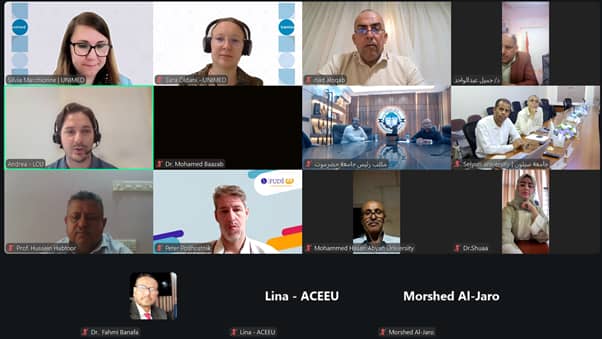
The occasion was the final conference of the Yemen Higher Education for Leadership and
Development (YHELD) project, an initiative co-funded by the European Union that has spent the
Past three years helping Yemeni universities strengthen their internationalisation strategies and
reconnect with regional and global academic networks.
Representatives from the University of Aden, Hadhramout University, Abyan University, Al Adel
University, the University of Lahej, Seiyun University, Shabwah University, and Taiz
University joined European partners in Cairo to review the project’s achievements and discuss
Mechanisms designed to sustain cooperation beyond the project’s conclusion.
During the conference, participants endorsed the frameworks for two new cooperation
platforms -the Yemeni International Relations Offices (IRO) Network and the Euro–Yemeni
Academic Cooperation Network. The two initiatives are intended to strengthen coordination
among Yemeni universities, expand international partnerships, support academic mobility, and
create new opportunities for research collaboration.
A Coordinated Voice for Yemeni Higher Education
For many participants, one of the project’s most significant outcomes has been the
creation of a national platform that enables Yemeni universities to work together on
internationalisation rather than pursuing international engagement independently.
Dr. Mohamed Salem Baazab, Director General of International Relations at the University of
Aden and the project’s local coordinator, said the Yemeni international relations network
provides universities with a forum to exchange knowledge, practices, coordinate international
partnerships, and strengthen institutional capacity.
“The creation of the Yemeni IRO Network means that Yemeni universities now have a
coordinated platform to collaborate on internationalisation, exchange expertise, and
strengthen higher education development.”
Baazab added that the network will support the sharing of best practices, facilitate joint
training and research initiatives, improve institutional capacities, and create a stronger
collective presence for Yemeni universities in regional and international higher education
initiatives. It will also help Yemeni institutions engage more effectively with international
projects, funding opportunities, and academic cooperation programmes.
International Cooperation as a Strategic Necessity
University leaders participating in the conference argued that international engagement has
Become essential for the future development of higher education in Yemen.
Professor Muhammad Saeed Khanbash, President of Hadhramout University, described
international cooperation as a strategic necessity for Yemeni universities seeking to
improve educational quality, strengthen research capacity, and expand opportunities for students and faculty members.
“Yemeni universities today need to broaden their academic horizons and engage with international experiences and expertise in ways that contribute to improving the quality of
education and scientific research,” Khanbash said.
He believes international partnerships provide access to modern technologies, training
opportunities, institutional development programmes, and collaborative
research initiatives that can help universities respond more effectively to contemporary challenges.
Hadhramout University has already developed partnerships with institutions in Malaysia,
Brunei, Indonesia, and Europe through research collaborations, student exchange initiatives,
and international projects. The university has also participated in different European
cooperation projects, under the framework of the Erasmus+ programme such as capacity
building for higher education like the Yemeni Higher Education Leadership and
Development project, the European Union’s Erasmus+ capacity building project MOVE, and
its International Credit Mobility system Co-operation in the Mediterranean through Mobility of Students and Staff (COMMO) which UNIMED runs for Erasmus+.
Universities Operating Under Extraordinary Conditions
The push toward greater internationalisation comes despite significant challenges facing
higher education institutions across Yemen. European partners involved in the project point to a
combination of factors that continue that affect universities, including limited resources,
infrastructure constraints, mobility restrictions and difficulties accessing international
academic opportunities.
Silvia Marchionne, Senior Project Manager at the Mediterranean Universities Union (UNIMED),
said the Yemeni case differs from many other regional cooperation initiatives because
academic partnerships serve not only traditional higher education goals but also institutional resilience.
“International partnerships help universities preserve their institutional continuity,
Maintain academic standards, and avoid further isolation from global higher education
systems.”
Marchionne noted that Yemeni universities have continued operating under exceptionally
Difficult circumstances, often relying on the commitment of faculty members and university
leadership to sustain teaching and research activities.
For this reason, she argued, supporting higher education in Yemen goes beyond educational
development. It also contributes to preserving spaces for knowledge production, dialogue, and future social and economic recovery.
University networks, she added, can play a critical role in reducing academic isolation by
creating channels for collaboration, resource sharing, capacity building, and access to international expertise.
Building Capacity for the Long Term
A central objective of the Yemeni Higher Education and Leadership Development project
has been helping Yemeni universities move from planning to implementation.
The initiative supported participating institutions in developing internationalisation strategies,
strengthening International Relations Offices, improving communication capacities, and
establishing practical frameworks for managing international partnerships.
Training activities brought together university leaders and international relations staff from
all eight participating Yemeni institutions to build skills in strategic planning, academic mobility,
communication, project development and international cooperation.
The project also encouraged universities to identify shared priorities and develop long-term
approaches to collaboration in areas such as research, mobility, fundraising, and institutional development.
Andrea Damiani, Coordinator of the Yemeni Higher Education and Leadership Development
project at Link Campus University in Italy, said one of the most important outcomes extended
beyond technical achievements.
“The relationship that has developed between the European and Yemeni partners has far
Exceeded even the most optimistic expectations.”
Damiani added that the resilience demonstrated by Yemeni participants helped transform
internationalisation from a theoretical concept into practical institutional strategies adapted to local realities.
He described the project as evidence that meaningful and lasting cooperation can be achieved
Even in difficult circumstances through commitment, mutual trust, and the sharing of expertise.
Women’s Role in Internationalisation
Conference discussions also highlighted the importance of ensuring that women play an active role in shaping the future of higher education in Yemen.
Dr. Shuaa Al-Haddar of the University of Lahej argued that women’s participation should be viewed as a strategic necessity rather than solely a matter of gender equality.
“Involving women is essential for the future of internationalising higher education in Yemen.”
She said women could make significant contributions to innovation, inclusivity, sustainability,
digital transformation, and emerging fields such as artificial intelligence.
She also believed that internationalisation efforts must be designed to create
opportunities for broader participation and leadership within higher education institutions.
Looking Beyond the Project
Although the Yemeni project is reaching its conclusion, participants emphasised that the work is only beginning.
“The newly established Yemeni international relations network and Euro–Yemeni
Academic Cooperation Network are expected to serve as long-term platforms for future
collaboration among Yemeni and European universities,” UNIMED Director, Dr. Marcello Scalisi
said. Their objectives included promoting academic mobility, supporting collaborative
research, developing joint projects, facilitating the exchange of expertise, and helping Yemeni institutions access international funding opportunities.
“UNIMED has already begun inviting European universities to join the Euro–Yemeni Academic
Cooperation Network, with the aim of expanding partnerships between Yemeni institutions and universities across Europe,” Dr. Scalisi added.
Future activities are expected to focus on project development, academic exchange, research cooperation, communication, and capacity building, while also exploring new funding mechanisms to sustain collaboration.
The networks form part of a broader vision to establish a permanent national coordination
mechanism for internationalisation in Yemen and a stable platform for Euro–Yemeni academic cooperation.
Beyond Survival For many years, discussions about higher education in Yemen have focused on crisis
Management and institutional survival. The conversations taking place in Cairo reflected a
broader ambition. University leaders are increasingly looking beyond immediate challenges
toward a future in which Yemeni institutions participate more actively in regional and global academic networks, contribute to international research, and provide students and faculty members with greater
opportunities for engagement and development.
For the universities involved, internationalisation is no longer simply about mobility programmes or international rankings. It is increasingly viewed as a pathway to resilience,
institutional strengthening, and long-term recovery.
The creation of new national and international cooperation networks will not solve all the
Challenges facing Yemeni higher education, but for the universities involved, they represent an
important step toward reconnecting with the wider academic world—and ensuring that Yemeni
scholars and students remain part of it.